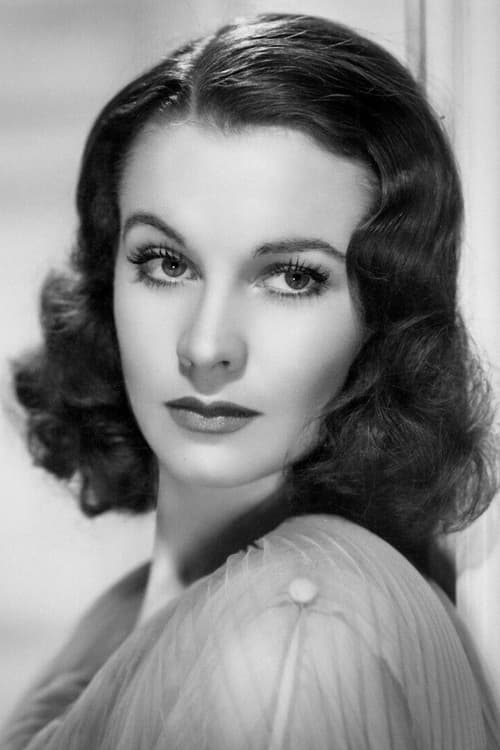
Known For
The Ed Sullivan Show is an American TV variety show that originally ran on CBS from Sunday June 20, 1948 to Sunday June 6, 1971, and was hosted by New York entertainment columnist Ed Sullivan. It was replaced in September 1971 by the CBS Sunday Night Movie, which ran only one season and was eventually replaced by other shows. In 2002, The Ed Sullivan Show was ranked #15 on TV Guide's 50 Greatest TV Shows of All Time.
The spoiled daughter of a Georgia plantation owner conducts a tumultuous romance with a cynical profiteer during the American Civil War and Reconstruction Era.
A disturbed, aging Southern belle moves in with her sister for solace — but being face-to-face with her brutish brother-in-law accelerates her downward spiral.
Presents a filmed, intercontinental conversation that links moderator Edward R. Murrow in New York with three internationally known figures located in different parts of the world. What set this apart from other televised interview/discussion programs was the fact that its participants could not see each other but could hear one another via telephone lines and radio.
On the eve of World War II, a British officer revisits Waterloo Bridge and recalls the young man he was at the beginning of World War I and the young ballerina he met just before he left for the front.
A varied group of passengers boarding a ship bound for pre-WWII Germany represents a microcosm of early-1930s society.
In Imperial Russia, Anna, wife of the officer Karenin, goes to Moscow to visit her brother. On the way, she meets charming cavalry officer Vronsky, to whom she's immediately attracted— but in St. Petersburg’s high society, a relationship like this could destroy a woman’s reputation.
At the height of the Roman Civil War, an aging Julius Caesar finds himself intrigued by the young Egyptian queen Cleopatra, whom he teaches how to rule Egypt.
The story of courtesan and dance-hall girl Emma Hamilton, including her relationships with Sir William Hamilton and Admiral Horatio Nelson and her rise and fall, set during the Napoleonic Wars.
Out-takes (mostly from Warner Bros.), promotional shorts, movie premieres, public service pleas, wardrobe tests, documentary material, and archival footage make up this star-studded voyeuristic look at the Golden age of Hollywood during the 30s, 40, and 50.
Photo Gallery


Movie Credits (75)
Sir Alexander Korda, one of the world's most flamboyant movie tycoons, rose from obscurity in rural Hungary to become a legendary filmmaker. With him were his brothers, Zoltan and Vincent, all living charmed lives in circles that included Vivien Leigh, Sir Laurence Olivier, Marlene Dietrich, H.G. Wells and Merle Oberon, who was soon to be Alex's wife. But along with Alex's flair for success lies an equally powerful impulse for destruction.
How can one find “spaces of agency” (bell hooks) in a racist film? How can unseen, unacknowledged labor be rendered visible videographically? And why is a VHS tape of "Gone with the Wind" preferable to all remasterings?
In "Gone with the Wind" she was an unforgettable Scarlett O'Hara. Beauty, two-time Oscar winner, celebrated Hollywood star and great Shakespearean interpreter - Vivien Leigh was all that. Behind the celebrity, however, was a fragile person. Her bipolar disorder clouded her success and her private happiness.
Screen tests shot mid January 1939 in Technicolor to assess hairstyles, makeup, and costumes for final and semi-final cast members. Stars featured in the final film are Vivien Leigh, Clark Gable, Leslie Howard, Olivia de Havilland, Hattie McDaniel, and Evelyn Keyes; the four who were not cast include Margaret Tallichet, Georgiana Young, Leatrice Joy Gilbert and Edythe Marrener (later known as Susan Hayward). Commentary and film prints courtesy of the George Eastman Museum.
Winston Churchill understood the power of films, but the true extent of his use of cinema as a propaganda tool is rarely explored. In 1934, one of Britain's most celebrated film producers, Alexander Korda, signed Churchill up as a screenwriter and historical advisor. It was the start of a unique collaboration. Churchill provided script notes for Korda's productions and penned an epic screenplay. When war broke out, their collaboration took on national importance. Korda was sent on a mission to Hollywood to help bring America into the war, with positive results. With access to previously undiscovered documents, this film documentary examines that mission and a friendship that underpinned a unique, creative partnership.
A deliciously scandalous portrait of unsung Hollywood legend Scotty Bowers, whose bestselling memoir chronicled his decades spent as sexual procurer to the stars.
A glimpse into the life of Vivien Leigh, told through a selection from the thousands of personal letters, documents, diaries and photographs held by The Victoria and Albert Museum, which acquired Vivien's archive in 2013.
A brief overview of the life and career of Vivien Leigh.
The newsreel series Jornal Português (1938-1951) was produced for the Secretariat of National Propaganda (SPN/SNI) by the "Portuguese Newsreel Society" (SPAC), under the technical supervision of António Lopes Ribeiro. It was conceived and employed as part of the propaganda machinery of Salazar's regime. Screened in cinema theatres prior to the main feature film, each issue of Jornal had approximately ten minutes in length and covered a variety of official government acts, national political news, major sports events and other assorted social and cultural affairs. Jornal Português is not only an indispensable document for the history of Estado Novo's propaganda, but also an unparalleled audiovisual archive of 1940s Portugal.
Documentary looking at the life and career of 1930s film star Leslie Howard. It features exclusive home movie footage, including footage from the Gone with the Wind set. The film includes extensive interviews with Howard's daughter, Leslie Ruth "Doodie" Howard, and contributions from friends and colleagues.
Biographer Anne Edwards looks at life and career of actress Vivien Leigh. Includes interview footage, film clips and stills.
This documentary focuses on 1939, considered to be Hollywood's greatest year, with film clips and insight into what made the year so special.
Combining unprecedented access to Davis' vast personal archives with original interviews, this documentary reveals a startling portrait of one of Hollywood's most gifted and enigmatic stars.
Censorship issues with the film "A Streetcar Named Desire."
A short overview of Brando's career.
How the play was adapted to Film
The score of Alex North for A Streetcar Named Desire is analyzed.
Interviews and photos about the play on Broadway
This documentary is featured in the 4-disc Collector's Edition DVD set, released in 2004, for Gone with the Wind (1939).
DVD featurette on the restoration of Gone with the Wind (1939).
TV Credits (3)
Presents a filmed, intercontinental conversation that links moderator Edward R. Murrow in New York with three internationally known figures located in different parts of the world. What set this apart from other televised interview/discussion programs was the fact that its participants could not see each other but could hear one another via telephone lines and radio.
The Ed Sullivan Show is an American TV variety show that originally ran on CBS from Sunday June 20, 1948 to Sunday June 6, 1971, and was hosted by New York entertainment columnist Ed Sullivan. It was replaced in September 1971 by the CBS Sunday Night Movie, which ran only one season and was eventually replaced by other shows. In 2002, The Ed Sullivan Show was ranked #15 on TV Guide's 50 Greatest TV Shows of All Time.
