Known For
World in Action was Granada Television’s flagship ITV current affairs series, running from 7 Jan 1963 to 7 Dec 1998, and built a reputation for film-led investigative reporting and a forceful editorial stance. Its journalism produced major public and political repercussions—including investigations associated with miscarriages of justice such as the Birmingham Six—and it also served as a platform for landmark documentary projects, including the first broadcast of “Seven Up!” as part of the strand in 1964.
An in-depth look at news stories. Documentaries that take you behind the scenes giving an insight into people's lives or institutions.
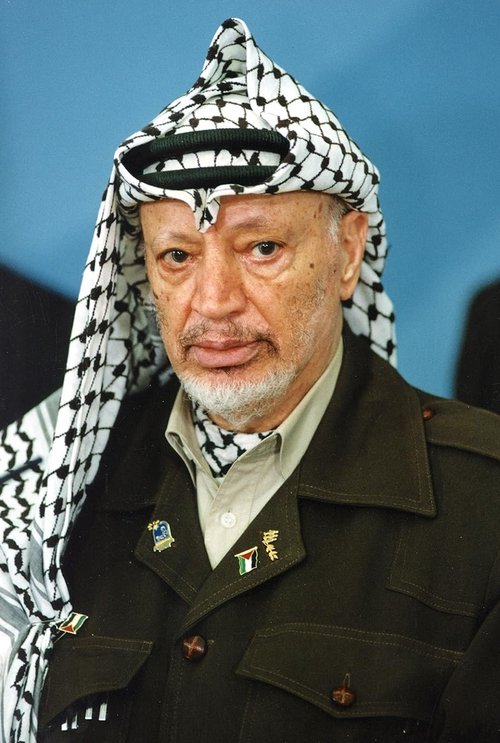
A portrait of Palestinian political leader Yasser Arafat (1929-2004).
In 1980, the black Falashas in Ethiopia are recognised as genuine Jews and are secretly carried to Israel. The day before the transport the son of a Jewish mother dies. In his place and with his name (Schlomo) she takes a Christian 9-year-old boy.
Chronicle of the attack perpetrated by the Palestinian terrorist group Black September in the Olympic Village during the 1972 Munich Summer Games.
They are the tragic stories at the heart of some of history's most defining moments - tales of hatred and obsession, fanaticism and a burning desire for attention. In Assassinations That Changed the World, HISTORY examines the famous assassinations and assassination attempts that have left their mark on humanity.
Prediction markets let anyone bet on anything, from the World Cup to alien invasions. "Instadocs" investigates the explosive rise of global betting.
This film attempts to correct the record when it comes to the left's attacks on President Bush, 9/11 and the war in Iraq and Kerry's 20-year tenure in the Senate.
Archival film maestro Göran Hugo Olsson has assembled—from a vast catalogue of footage in the vaults of Sweden’s national television service SVT—accounts of the Israeli-Palestinian conflict as witnessed and represented by Swedish journalists. Stories of the beginning of the Israeli state interwoven with the Palestinian struggle for independence. News coverage with Yasser Arafat and interviews with Israeli foreign minister Abba Eban during a visit to Sweden unseen since first broadcast. From the tenth anniversary of Israel’s founding to the First Intifada, perspectives and encounters with statesmen, civilians, revolutionaries, and intellectuals tell the story from myriad angles of an evolving media landscape, revivifying a history of the ongoing conflict.
Decision-makers from Israel, the Arab states, Russia, and the U.S. tell the inside story of the Arab-Israel conflict. Charts the evolution of tensions, violence, and peace efforts from 1948 to 1998.
Photo Gallery

Movie Credits (30)
Prediction markets let anyone bet on anything, from the World Cup to alien invasions. "Instadocs" investigates the explosive rise of global betting.
Columnist and author Natascha van Weezel and programme maker Sinan Can have been engaging in dialogue with people on both sides of the conflict since the start of the war in Gaza. Despite hatred, name-calling, and even threats on social media, they continue to seek dialogue. Last year, they did so in the Netherlands. Now, in the conflict zone itself. In Bridge over the Fault Line II, Natascha and Sinan travel to Israel, where war rhetoric usually drowns out reason.
A secret museum in an art hotel sparks intrigue when it's revealed to be a creation of controversial artist, Banksy. Using art as a form of political resistance, the hotel highlights the reality of life under Israeli military occupation. The film journeys through the hotel, Palestine, and a relevant past to dismantle the mainstream media's bias towards the Palestinian struggle for freedom and equality.
Archival film maestro Göran Hugo Olsson has assembled—from a vast catalogue of footage in the vaults of Sweden’s national television service SVT—accounts of the Israeli-Palestinian conflict as witnessed and represented by Swedish journalists. Stories of the beginning of the Israeli state interwoven with the Palestinian struggle for independence. News coverage with Yasser Arafat and interviews with Israeli foreign minister Abba Eban during a visit to Sweden unseen since first broadcast. From the tenth anniversary of Israel’s founding to the First Intifada, perspectives and encounters with statesmen, civilians, revolutionaries, and intellectuals tell the story from myriad angles of an evolving media landscape, revivifying a history of the ongoing conflict.
The attack by Hamas on Israel on October 7, 2023 changed the world. It is the greatest crime against Jews since the Holocaust of the German National Socialists, committed by Palestinian terrorists led by Hamas. The documentary examines how a terrorist organization could become the strongest political force in the Gaza Strip. What are its goals and how could Hamas grow into a company with an annual turnover of several hundred million dollars? Terrorism researchers, ethnologists and contemporary witnesses analyze the history and present of Hamas, whose main goal is the destruction of the State of Israel. Documents show how children are manipulated with anti-Western and anti-Israeli propaganda through television programs and in school lessons. Images show how minors are trained to be terrorists in Hamas summer camps. In interviews, experts report how the ideology of the Hamas movement is also spilling over into Europe and bringing with it a whole new dimension of anti-Semitism.
A look back on the life of Nobel Peace Prize winner, Shimon Peres, who served as prime minister of Israel twice and negotiated the 1994 Israel-Jordan peace treaty.
An exhaustive explanation of how the military occupation of an invaded territory occurs and its consequences, using as a paradigmatic example the recent history of Israel and the Palestinian territories, the West Bank and the Gaza Strip, from 1967, when the Six-Day War took place, to the present day; an account by filmmaker Avi Mograbi enriched by the testimonies of Israeli army veterans.
Sketch of Sigrid Kaag's transformation from UN diplomat to minister and D66 party leader. How is she faring in a changed Netherlands, where her actions as well as her private life are dissected?
The apocalyptic blast in the Port of Beirut, Lebanon, on August 4, 2020, exacerbates anger at those in power: protests cross religious boundaries as the Lebanese people curse corruption, nepotism, gross economic mismanagement and squandering of resources. How did the Land of Cedars, a country with so much to offer, allow itself to get into such a dire situation? And will it be able to bounce back?
A walk through the life and career of the legendary French photojournalist Christine Spengler, known as Moonface, one of the few female war reporters in the seventies, also a writer and surrealist painter, who worked in Chad, Northern Ireland, Vietnam, Cambodia, Afghanistan, Lebanon, Iran, Iraq and other places where unfortunately war and death prevailed for years.
Twenty years before the spectacle of Donald Trump, Benjamin Netanyahu already understood the political benefits of a toxic relationship with the media, and direct communication with the public. King Bibi explores Netanyahu's rise to power, relying solely on archival footage of his media performances over the years: from his days as a popular guest expert on American TV, through his public confession of adultery, and his mastery of the art of social media. From one studio to another, "Bibi" evolved from Israel's great political hope, to a controversial figure whom some perceive as Israel's savior, and others - as a cynical politician who will stop at nothing to retain his power.
Two Meetings and a Funeral explores Bangladesh’s historical pivot from the socialism of the 1973 Non-Aligned Movement (NAM) meeting in Algeria to its ideological counterpoint, the emergence of a strong Islamic perspective at the 1974 Organisation of Islamic Countries (OIC) meeting in Lahore. Centred on Bangladesh’s navigation of these two historic meetings, as well as its fight for United Nations recognition (vetoed by China, acting as a proxy for Pakistan), the film considers the erosion of the idea of the Third World as a potential space for decolonialism, liberation theology and socialism. In particular, it looks at how a transnational Islamic ‘ummah’ concept was used against socialist forces.
From the early 1960s to the mid-1970s, independent Algeria provided significant support to anti-colonial movements and revolutionaries worldwide. Successive presidents, Ahmed Ben Bella and then Houari Boumédiène, made Algiers a haven for activists fighting against colonial and racial oppression. Algiers the White became Algiers the Red. The internationalist Che Guevara established his base of operations there for his guerrilla activities in Africa. The African-American leader Eldridge Cleaver made it the international headquarters of the Black Panther Party. During this period, Algiers was known as "The Mecca of Revolutionaries."
A young Arab is caught between cultures as he is sent to a prestigious Jewish boarding school in Israel in the 1980s.
Swedish Prime Minister Olof Palme was openly shot to death on a February evening 1986 on the streets of Stockholm. In one night, the country of Sweden was transfigured. “Palme” is about his life, his time, and about the Sweden he had created. About a man who altered history.
"It was a kind of flywheel that you set in motion; I couldn't turn back at all," says Hans van Mierlo in the film about his political career. That career began in 1966 when he founded the political party D66 with a number of like-minded individuals. Clearly visible from the editorial office of the Algemeen Handelsblad on the Nieuwezijds Voorburgwal in Amsterdam, the unrest was crowing, fueled by Provo. The pillar society, which had kept the Netherlands afloat for so long, was no longer adequate. That was his analysis, and a much more direct democracy would have to take its place.
The key individuals of the Iraqi-Nazi connection.
In 1980, the black Falashas in Ethiopia are recognised as genuine Jews and are secretly carried to Israel. The day before the transport the son of a Jewish mother dies. In his place and with his name (Schlomo) she takes a Christian 9-year-old boy.
This film attempts to correct the record when it comes to the left's attacks on President Bush, 9/11 and the war in Iraq and Kerry's 20-year tenure in the Senate.
2003 documentary film produced by Oliver Stone for the HBO series America Undercover about the conflict in occupied Palestine. He speaks with Ehud Barak and Benjamin Netanyahu, former prime ministers of Israel, Yasser Arafat, late president of the Palestinian National Authority, and various Palestinian activists resisting the oppression of the zionist regime.
TV Credits (8)
A portrait of Palestinian political leader Yasser Arafat (1929-2004).
Chronicle of the attack perpetrated by the Palestinian terrorist group Black September in the Olympic Village during the 1972 Munich Summer Games.
During the 1970s the Middle East was a battleground for the Cold War; liberal pro-Western forces battled with pro-Soviet Arab Nationalists and Baathists. But in 1979 a series of events – the Iranian Revolution, Egypt’s peace with Israel, the Mecca Mosque Siege, and the Soviet Invasion of Afghanistan – contributed to a radical change in the mind-set of the region and its leaders. It was the start of the meteoric rise of radical Islam.
Israel and the Arabs: Elusive Peace is the name of a three-part British documentary series shown in October 2005 on BBC Two about the attempts to settle the Israeli–Palestinian conflict after the 2000 Camp David Summit. The series was produced by Norma Percy, who had produced The Death of Yugoslavia before. Like her previous series, Israel and the Arabs: Elusive Peace relies extensively on in-depth interviews with key players involved in this issue, such as Ehud Barak, Bill Clinton, and Colin Powell.
Decision-makers from Israel, the Arab states, Russia, and the U.S. tell the inside story of the Arab-Israel conflict. Charts the evolution of tensions, violence, and peace efforts from 1948 to 1998.
They are the tragic stories at the heart of some of history's most defining moments - tales of hatred and obsession, fanaticism and a burning desire for attention. In Assassinations That Changed the World, HISTORY examines the famous assassinations and assassination attempts that have left their mark on humanity.
An in-depth look at news stories. Documentaries that take you behind the scenes giving an insight into people's lives or institutions.
World in Action was Granada Television’s flagship ITV current affairs series, running from 7 Jan 1963 to 7 Dec 1998, and built a reputation for film-led investigative reporting and a forceful editorial stance. Its journalism produced major public and political repercussions—including investigations associated with miscarriages of justice such as the Birmingham Six—and it also served as a platform for landmark documentary projects, including the first broadcast of “Seven Up!” as part of the strand in 1964.
