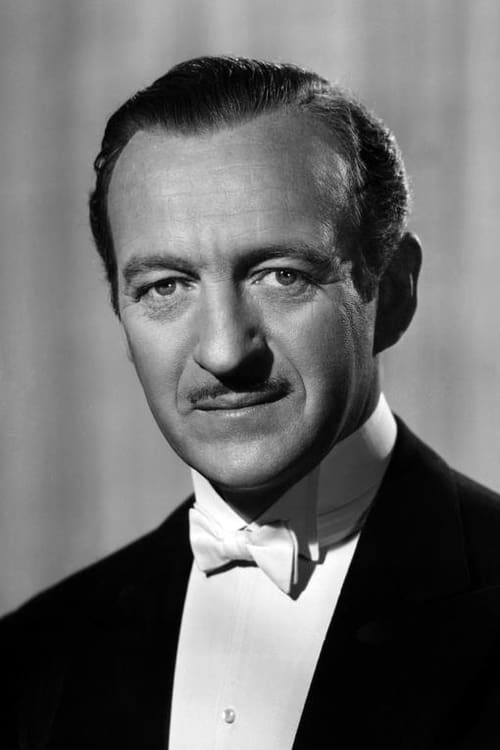
Known For
The Tonight Show Starring Johnny Carson is a talk show hosted by Johnny Carson under The Tonight Show franchise from 1962 to 1992. It originally aired during late-night. For its first ten years, Carson's Tonight Show was based in New York City with occasional trips to Burbank, California; in May 1972, the show moved permanently to Burbank, California. In 2002, The Tonight Show Starring Johnny Carson was ranked #12 on TV Guide's 50 Greatest TV Shows of All Time.
The Mike Douglas Show is an American daytime television talk show hosted by Mike Douglas that originally aired only in the Cleveland area during much of its first two years on the air. It then went into syndication in 1963 and remained on television until 1982. It was distributed by Westinghouse Broadcasting and for much of its run, originated from studios of two of the company's TV stations in Cleveland and Philadelphia.
An annual awards ceremony recognizing excellence in film and television, both domestic and foreign, bestowed by the Hollywood Foreign Press Association.
Robert Montgomery Presents is an American dramatic television series which was produced by NBC from January 30, 1950 until June 24, 1957. The live show had several sponsors during its seven-year run, and the title was altered to feature the sponsor, usually Lucky Strike cigarettes, for example, Robert Montgomery Presents Your Lucky Strike Theater, ....The Johnson's Wax Program, and so on.
Dick Powell's Zane Grey Theatre, sometimes simply called Zane Grey Theatre, is an American Western anthology series which ran on CBS from 1956 to 1961.
The Dick Cavett Show has been the title of several talk shows hosted by Dick Cavett on various television networks.
Burke's Law is an American detective series that ran on ABC from 1963 to 1965 and was revived on CBS in the 1990s. The show starred Gene Barry as Amos Burke, millionaire captain of Los Angeles police homicide division, who was chauffeured around to solve crimes in his Rolls-Royce Silver Cloud II.
Four Star Playhouse is an American television anthology series that ran from 1952 to 1956, sponsored in its first bi-weekly season by The Singer Company; Bristol-Myers became an alternate sponsor when it became a weekly series in the fall of 1953. The original premise was that Charles Boyer, Ida Lupino, David Niven, and Dick Powell would take turns starring in episodes. However, several other performers took the lead from time to time, including Ronald Colman and Joan Fontaine. Blake Edwards was among the writers and directors who contributed to the series. Edwards created the recurring character of illegal gambling house operator Willie Dante for Dick Powell to play on this series. The character was later revamped and spun off in his own series starring Howard Duff, then-husband of Lupino. The pilot for Meet McGraw, starring Frank Lovejoy, aired here, as did another episode in which Lovejoy recreated his role of Chicago newspaper reporter Randy Stone, from the radio drama Nightbeat.
Photo Gallery


Movie Credits (119)
Sir Alexander Korda, one of the world's most flamboyant movie tycoons, rose from obscurity in rural Hungary to become a legendary filmmaker. With him were his brothers, Zoltan and Vincent, all living charmed lives in circles that included Vivien Leigh, Sir Laurence Olivier, Marlene Dietrich, H.G. Wells and Merle Oberon, who was soon to be Alex's wife. But along with Alex's flair for success lies an equally powerful impulse for destruction.
Martin Scorsese presents this very personal and insightful new feature-length documentary about British filmmakers Michael Powell and Emeric Pressburger.
In the 1950s, a small group of artists monopolized the attention of the cameras and the public. Frank Sinatra, Dean Martin, Sammy Davis Jr., Joey Bishop and Peter Lawford together form the "rat pack": they sing the most popular hits of the moment, star in the most profitable Hollywood films and are already making a splash on television . This documentary, produced by a recognized specialist in the history of Hollywood, recounts the exceptional destiny of this informal group which flirted with the greats of this world, notably through Sinatra, personal friend of American President Kennedy.
How a young and wild tomboy Tunisian girl became a great actress by accident. Claudia Cardinale : the fanciful destiny of a paradoxical movie star, who appeared in Federico Fellini's, Luchino Visconti's, Blake Edwards' and Sergio Leone's films.
Documentary looking at the life and career of 1930s film star Leslie Howard. It features exclusive home movie footage, including footage from the Gone with the Wind set. The film includes extensive interviews with Howard's daughter, Leslie Ruth "Doodie" Howard, and contributions from friends and colleagues.
A documentary about the life of Errol Flynn, with recollections from friends and family.
A film biography with a difference, Sir John Mills' Moving Memories charts the life of one of Britain's most distinguished actors. Compiled from interviews with the man himself and with his family and friends, it traces his career from humble beginnings to all-time great of British cinema. The many film clips reveal an electric screen presence and a willingness to undertake a range of difficult, challenging roles.
Hosted by Christopher Lee, this documentary examines the different actors who have portrayed Dracula over the years.
Stephen H. Bogart narrates the rise to fame of his father, Humphrey Bogart through the use of film clips, written material and interviews of friends and co-workers.
The story of actor Roger Moore, including clips from his movies, television shows and interviews with the actor, his family and acquaintances.
This documentary, hosted by actor Burgess Meredith, explores the life and career of movie director Otto Preminger, whose body of work includes such memorable films as Anatomy of a Murder, Exodus, Laura, Forever Amber, Advise and Consent, In Harm's Way, The Moon Is Blue, The Man with the Golden Arm, and many other movies made from the '30s through the '70s. Interviews with actors Frank Sinatra, Vincent Price, James Stewart, Michael Caine, and others who worked with the flamboyant and sometimes control-obsessed director add information and insight to the story.
In a rare television interview, Doris Day looks back over her successful acting and singing career, and recalls happy memories of working with Rock Hudson, James Cagney, Clark Gable and James Garner.
Talented and enduring Academy Award-winning star, Gregory Peck, tells how it was when studios ruled and a shy boy from a broken family could rise to become a famous leading man. Unfashionably modest, Peck describes his fascinating journey from early theater roles, through his first films, to Hollywood’s elder statesman.
William Shatner, Liz Taylor and many more stars blow lines, lose their pants and more in this hilarious collection of movie and TV bloopers.
Inspector Clouseau disappears, and the Surete wants the world's second best detective to look for him. However, Clouseau's enemy, Dreyfus, rigs the Surete's computer to select, instead, the world's WORST detective, NYPD Sgt. Clifton Sleigh. Sleigh obtusely bungles his way past assassins and corrupt officials as though he were Clouseau's American cousin.
Two men show up claiming to be the grandfather of a child heiress.
The Pink Panther diamond is stolen once again from Lugash and the authorities call in Chief Inspector Clouseau from France. His plane disappears en-route. This time, famous French TV reporter Marie Jouvet sets out to solve the mystery and starts to interview everybody connected to Clouseau.
A German spy is passing on information about the location of Allied ships in the neutral harbor of Goa, India, with catastrophic results. Unable to undertake a full military operation in the Portuguese stronghold, English intelligence brings out of retirement a crew of geriatric ex-soldiers, veterans from World War I, using their age as cover. These old soldiers are asked to take to the seas and pull off an unlikely undercover mission.
Two sophisticated jewel thieves join forces to steal $30 million in uncut jewels.
An American ex-con who is trying to go straight is persuaded to be the inside man for an audacious bank job in central London.
TV Credits (65)
A look back at television appearances by legends of the silver screen, using archive footage to tell the story of their lives and careers.
During World War II, a wealthy Canadian uses his own money to help the Allies form an espionage network.
Dinah's show premiered 9 September 1974 and continued through to 4 September 1981. She started out the 70's with Dinah's Place which usually featured one guest and was more of a home oriented show about cooking, crafts and occasionally music. This format lasted until May of 1974. When the show came back in October of 1974 the format had changed drastically to a variety talk show which was called Dinah. and went on until 1981. This show was also known as "Dinah and Friends" during the summer of 1976.
In 1973 the American Film Institute initiated its Life Achievement Award, to be presented to a yearly recipient whose talent has fundamentally advanced the film art; whose accomplishments have been acknowledged by scholars, critics, professional peers and the general public; and whose work has stood the test of time.
V.I.P.-Schaukel is a 45 minute documentary-family-news-talk show starring Margret Dünser as Host. The series premiered on Sun May 09, 1971 on ZDF and Folge 37 - Final Show last aired on Fri May 09, 1980.
The Dick Cavett Show has been the title of several talk shows hosted by Dick Cavett on various television networks.
The Rogues is an American television series that appeared on NBC from September 13, 1964, to April 18, 1965, starring David Niven, Charles Boyer, and Gig Young as a related trio of former conmen who could, for the right price, be persuaded to trick a very wealthy and heinously unscrupulous mark. Although it won the 1964 Golden Globe award for Best Television Series, the show was cancelled after one season consisting of thirty episodes.
Burke's Law is an American detective series that ran on ABC from 1963 to 1965 and was revived on CBS in the 1990s. The show starred Gene Barry as Amos Burke, millionaire captain of Los Angeles police homicide division, who was chauffeured around to solve crimes in his Rolls-Royce Silver Cloud II.
The Tonight Show Starring Johnny Carson is a talk show hosted by Johnny Carson under The Tonight Show franchise from 1962 to 1992. It originally aired during late-night. For its first ten years, Carson's Tonight Show was based in New York City with occasional trips to Burbank, California; in May 1972, the show moved permanently to Burbank, California. In 2002, The Tonight Show Starring Johnny Carson was ranked #12 on TV Guide's 50 Greatest TV Shows of All Time.
The Mike Douglas Show is an American daytime television talk show hosted by Mike Douglas that originally aired only in the Cleveland area during much of its first two years on the air. It then went into syndication in 1963 and remained on television until 1982. It was distributed by Westinghouse Broadcasting and for much of its run, originated from studios of two of the company's TV stations in Cleveland and Philadelphia.
The Dick Powell Show is an American anthology series that ran on NBC from 1961- 1963, primarily sponsored by the Reynolds Metals Company. It was hosted by longtime film star Dick Powell until his death from lymphatic cancer on January 2, 1963, then by a series of guest hosts until the series ended. The first of these was Gregory Peck, who began the January 8 program with a tribute to Powell, recognizing him as "a great and good friend to our industry." Peck was followed by fellow actors such as Robert Mitchum, Frank Sinatra, Glenn Ford, Charles Boyer, Jackie Cooper, Rock Hudson, Milton Berle, Jack Lemmon, Dean Martin, Robert Taylor, Steve McQueen, David Niven, Danny Thomas, Robert Wagner and John Wayne.
The DuPont Show with June Allyson is an American anthology drama series which aired on CBS from September 21, 1959 to April 3, 1961 with rebroadcasts continuing until June 12, 1961. The series was hosted by actress June Allyson.
The David Niven Show is an American anthology series that aired from April 7 until July 7, 1959.
Alcoa Theatre is a half-hour American anthology series telecast on NBC at 9:30 pm on alternate Monday nights from October 7, 1957 to September 16, 1960. The program also aired under the title Turn of Fate, with the stories depicting the difficulties faced by individuals who are suddenly thrust into unexpected and perilous dangers. Alcoa Theatre was syndicated together with Goodyear Theatre as Award Theatre. In 1955, The Alcoa Hour premiered in a one-hour format aired on Sunday nights, but it was reduced to 30 minutes, retitled Alcoa Theatre, and moved to Monday evening in 1957. The show employed an alternating rotating company of actors: David Niven, Robert Ryan, Jane Powell, Jack Lemmon and Charles Boyer. Each appeared in dramatic and light comedic roles through the first season.
Goodyear Theatre is a 30-minute dramatic television anthology series telecast on NBC from 1957 to 1960 for a total of 55 episodes. The live show was directed by Don Taylor, Arthur Hiller and James Sheldon. It followed Goodyear Television Playhouse.
