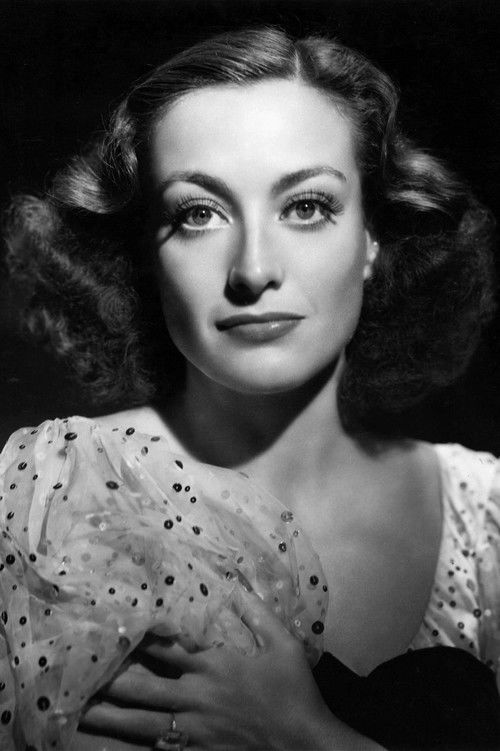
Known For
The Tonight Show Starring Johnny Carson is a talk show hosted by Johnny Carson under The Tonight Show franchise from 1962 to 1992. It originally aired during late-night. For its first ten years, Carson's Tonight Show was based in New York City with occasional trips to Burbank, California; in May 1972, the show moved permanently to Burbank, California. In 2002, The Tonight Show Starring Johnny Carson was ranked #12 on TV Guide's 50 Greatest TV Shows of All Time.
The best in the performing arts from across America and around the world including a diverse programming portfolio of classical music, opera, popular song, musical theater, dance, drama, and performance documentaries.
The Shiloh Ranch in Wyoming Territory of the 1890s is owned in sequence by Judge Henry Garth, the Grainger brothers, and Colonel Alan MacKenzie. It is the setting for a variety of stories, many more based on character and relationships than the usual western.
The Lucy Show is an American sitcom that aired on CBS from 1962–68. It was Lucille Ball's follow-up to I Love Lucy. A significant change in cast and premise for the 1965–66 season divides the program into two distinct eras; aside from Ball, only Gale Gordon, who joined the program for its second season, remained. For the first three seasons, Vivian Vance was the co-star. The earliest scripts were entitled The Lucille Ball Show, but when this title was declined, producers thought of calling the show This Is Lucy or The New Adventures of Lucy, before deciding on the title The Lucy Show. Ball won consecutive Emmy Awards as Outstanding Lead Actress in a Comedy Series for the series' final two seasons, 1966–67 and 1967–68.
Dick Powell's Zane Grey Theatre, sometimes simply called Zane Grey Theatre, is an American Western anthology series which ran on CBS from 1956 to 1961.
Four panelists must determine guests' occupations - and, in the case of famous guests, while blindfolded, their identity - by asking only "yes" or "no" questions.
After discovering that his late father has gone through most of the family fortune, Tod Stiles hits the title trans-America highway in his Corvette in search of adventure with friend Buz Murdock, a survivor of New York's mean streets. The two work odd jobs as they meet and interact with colorful characters and find themselves plunged into one situation after another, some of them romantic, some of them very dangerous. Later, Linc Case, a Vietnam war hero trying to find himself, takes over as Tod's travel companion.
The Secret Storm is a soap opera which ran on CBS from February 1, 1954 to February 8, 1974. The series was created by Roy Winsor, who also created the long-running soap operas Search for Tomorrow and Love of Life. Gloria Monty of General Hospital fame was a longtime director of the series. Like most CBS Soap Operas of the time such as The Guiding Light and As the World Turns The Secret Storm was filmed, and later taped, in New York at the CBS Broadcast Center on West 52 Street.
Photo Gallery


Movie Credits (172)
The authorized documentary celebrating the film that redefined Hollywood, 50 years after its premiere. Featuring rare archival footage and interviews with acclaimed Hollywood directors alongside Steven Spielberg, top shark scientists, and conservationists, the film uncovers the behind-the-scenes chaos and how the film launched the summer blockbuster, inspired a new wave of filmmakers, and paved the way for shark conservation that continues today.
A tribute to a fascinating film shot by Alfred Hitchcock in 1958, starring James Stewart and Kim Novak, and to the city of San Francisco, California, where the magic was created; but also a challenge: how to pay homage to a masterpiece without using its footage; how to do it simply by gathering images from various sources, all of them haunted by the curse of a mysterious green fog that seems to cause irrepressible vertigo…
Sylvia Syms looks through the BBC archives to tell the story of one of Hollywood's greatest ever feuds - the rivalry between legendary actresses Bette Davis and Joan Crawford. Interviews from the 1960s and 70s reveal the mutual loathing that came to a head when, against all expectations, they starred together in the classic psychological thriller Whatever Happened to Baby Jane?. The programme looks in detail at the making of the film, examines the fallout when Bette and not Joan received an Oscar nomination for her performance, and shows how, despite the hatred, the pair had more in common than audiences appreciated.
Critics Kent Jones, B. Ruby Rich, Joe McElhaney and Miriam Bale discuss the unique qualities of "Johnny Guitar," its lasting appeal and the influence the film had on some prominent directors during the years.
Critics Kent Jones, B. Ruby Rich, Joe McElhaney and Miriam Bale take a closer look at the feminist overtones in "Johnny Guitar."
Larry Ceplair, co-author of The Inquisition in Hollywood, and blacklisted screenwriter Walter Bernstein, a former member of the Communist Party, discuss the socio-political environment in Hollywood during the 1940s and 1950s, as well as unusual production history of "Johnny Guitar."
These tapes consist on two interviews and three phone conversations (recorded without the knowledge of the two actresses) between newspaper columnist Shirley Eder and actresses Barbara Stanwyck and Joan Crawford.
Marilyn Monroe is one of the most famous and adored icons of the 20th century. Like no other Hollywood star, she won the hearts of millions around the world. It's been said that: "Monroe played the best game with the worst hand." Her journey to stardom stemmed from a childhood of poverty, neglect, and loneliness. 'Fascination' tells the remarkable story of Marilyn's life. From birth to her premature death she endured criticism, insecurities, drug dependence, numerous miscarriages, and three broken marriages. Despite all her demons, her unprecedented beauty, talent and quick wit amazed all that came before her.
I had a strong, slightly illicit, urge to commandeer the original train sequence from the 1931 film Possessed and make it move in such a way as to give the girl (Joan Crawford) what she thought she wanted: a position on the inside. To do that, I had to create my own (all encompassing) vehicle. By my count, the original sequence provides three orders of motion: the motion (and stillness) of the passengers on the train, the motion of the train itself, and finally the motion of the girl (Joan) outside of the train.
Explores the culture and characters of the Jazz Age through the decade's heroine, the flapper.
The life and career of screen siren, Brigitte Bardot.
This documentary focuses on 1939, considered to be Hollywood's greatest year, with film clips and insight into what made the year so special.
A look at the forces that shaped Pre-Code Hollywood and brought about the strict enforcement of the Hays Code in 1934.
Chronicles the last great American showman, filmmaker William Castle, a master of ballyhoo who became a brand name in movie horror with his outrageous audience participation gimmicks.
Before the G, PG and R ratings system there was the Production Code, and before that there was, well, nothing. This eye-opening documentary examines the rampant sexuality of early Hollywood through movie clips and reminiscences by stars of the era. Gloria Swanson, Mary Pickford, Marlene Dietrich and others relate tales of the artistic freedom that led to the draconian Production Code, which governed content from 1934 to 1968. Diane Lane narrates.
One of America's best loved comedians, Tim Conway (The Carol Burnett Show, Mchale's Navy) is featured here in hilarious TV clips from the 1960s. Conway portrays the popular character, Dag Hereford. A self-professed expert on everything, Dag proves to be the classic bumbler. Whether he's a horse-racing jockey, wine taster, prison warden or one of the country's leading race car drivers, Conway hams it up with stars of the day in rare, stand-up performances not seen in over 30 years.
An overview of the iconic actresses' legendary careers, as well as the rivalry that colored "What Ever Happened to Baby Jane?"
Combining unprecedented access to Davis' vast personal archives with original interviews, this documentary reveals a startling portrait of one of Hollywood's most gifted and enigmatic stars.
Making-of documentary about the 1933 musical, 42nd Street.
The Joan Crawford crime thriller, The Damned Don't Cry (1950), is the topic of discussion for various interviewees.
TV Credits (19)
Dr. Michael Rhodes, a professor of parapsychology who, along with his assistant Nancy Murphy, attempts to solve supernatural mysteries.
The best in the performing arts from across America and around the world including a diverse programming portfolio of classical music, opera, popular song, musical theater, dance, drama, and performance documentaries.
The Name of the Game is an American television series starring Tony Franciosa, Gene Barry, and Robert Stack that ran from 1968 to 1971 on NBC, totaling 76 episodes of 90 minutes. It was a pioneering wheel series, setting the stage for The Bold Ones and the NBC Mystery Movie in the 1970s. The show had an extremely large budget for a television series.
Agents Napoleon Solo and Illya Kuryakin work for a secret intelligence service working under the auspices of the U.N. Their immediate superior is Mr. Waverly. Together they operate out of a secret base beneath the streets of New York City, and accesses through several cover business such as Del Floria's Tailor Shop and the Masque Club. This secret intelligence service is called U.N.C.L.E. United Network Command for Law and Enforcement.
The Tonight Show Starring Johnny Carson is a talk show hosted by Johnny Carson under The Tonight Show franchise from 1962 to 1992. It originally aired during late-night. For its first ten years, Carson's Tonight Show was based in New York City with occasional trips to Burbank, California; in May 1972, the show moved permanently to Burbank, California. In 2002, The Tonight Show Starring Johnny Carson was ranked #12 on TV Guide's 50 Greatest TV Shows of All Time.
The Lucy Show is an American sitcom that aired on CBS from 1962–68. It was Lucille Ball's follow-up to I Love Lucy. A significant change in cast and premise for the 1965–66 season divides the program into two distinct eras; aside from Ball, only Gale Gordon, who joined the program for its second season, remained. For the first three seasons, Vivian Vance was the co-star. The earliest scripts were entitled The Lucille Ball Show, but when this title was declined, producers thought of calling the show This Is Lucy or The New Adventures of Lucy, before deciding on the title The Lucy Show. Ball won consecutive Emmy Awards as Outstanding Lead Actress in a Comedy Series for the series' final two seasons, 1966–67 and 1967–68.
The Shiloh Ranch in Wyoming Territory of the 1890s is owned in sequence by Judge Henry Garth, the Grainger brothers, and Colonel Alan MacKenzie. It is the setting for a variety of stories, many more based on character and relationships than the usual western.
After discovering that his late father has gone through most of the family fortune, Tod Stiles hits the title trans-America highway in his Corvette in search of adventure with friend Buz Murdock, a survivor of New York's mean streets. The two work odd jobs as they meet and interact with colorful characters and find themselves plunged into one situation after another, some of them romantic, some of them very dangerous. Later, Linc Case, a Vietnam war hero trying to find himself, takes over as Tod's travel companion.
Startime, an anthology of drama, comedy and variety, was one of the first American television shows broadcast in color.
Dick Powell's Zane Grey Theatre, sometimes simply called Zane Grey Theatre, is an American Western anthology series which ran on CBS from 1956 to 1961.
The Secret Storm is a soap opera which ran on CBS from February 1, 1954 to February 8, 1974. The series was created by Roy Winsor, who also created the long-running soap operas Search for Tomorrow and Love of Life. Gloria Monty of General Hospital fame was a longtime director of the series. Like most CBS Soap Operas of the time such as The Guiding Light and As the World Turns The Secret Storm was filmed, and later taped, in New York at the CBS Broadcast Center on West 52 Street.
An annual American awards ceremony honoring cinematic achievements in the film industry. The various category winners are awarded a copy of a statuette, officially the Academy Award of Merit, that is better known by its nickname Oscar.
General Electric Theater is an American anthology series hosted by Ronald Reagan that was broadcast on CBS radio and television. The series was sponsored by General Electric's Department of Public Relations.
The Colgate Comedy Hour is an American comedy-musical variety series that aired live on the NBC network from 1950 to 1955. The show starred many notable comedians and entertainers of the era, including Eddie Cantor, Dean Martin and Jerry Lewis, Fred Allen, Donald O'Connor, Bud Abbott and Lou Costello, Bob Hope, Jimmy Durante, Ray Bolger, Gordon MacRae, Ben Blue, Robert Paige, Tony Curtis, Burt Lancaster, Broadway dancer Wayne Lamb and Spike Jones and His City Slickers.
Four panelists must determine guests' occupations - and, in the case of famous guests, while blindfolded, their identity - by asking only "yes" or "no" questions.
