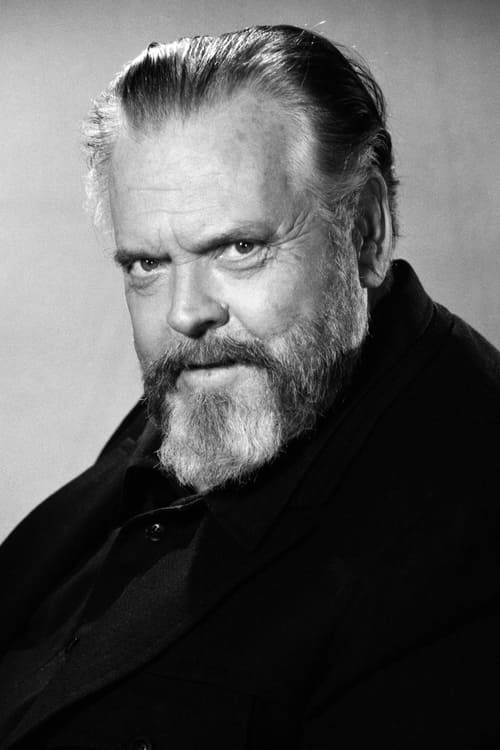
Known For
The Tonight Show Starring Johnny Carson is a talk show hosted by Johnny Carson under The Tonight Show franchise from 1962 to 1992. It originally aired during late-night. For its first ten years, Carson's Tonight Show was based in New York City with occasional trips to Burbank, California; in May 1972, the show moved permanently to Burbank, California. In 2002, The Tonight Show Starring Johnny Carson was ranked #12 on TV Guide's 50 Greatest TV Shows of All Time.
Four panelists must determine guests' occupations - and, in the case of famous guests, while blindfolded, their identity - by asking only "yes" or "no" questions.
A private investigator who works when he wants, lives in a beachfront estate in Hawaii, drives a posh Ferrari, runs up an unlimited tab at a swank bar, and charms attractive women in peril - that's the lifestyle of Thomas Magnum, aka Magnum, P.I.
TV's most-watched history series brings to life the compelling stories from our past that inform our understanding of the world today.
The Dick Cavett Show has been the title of several talk shows hosted by Dick Cavett on various television networks.
After being duped and going bankrupt, model Maddie is convinced by David to become a partner in a detective agency. Together they solve various cases, while getting comfortable with each other.
Cuban Bandleader Ricky Ricardo would be happy if his wife Lucy would just be a housewife. Instead she tries constantly to perform at the Tropicana where he works, and make life comically frantic in the apartment building they share with landlords Fred and Ethel Mertz, who also happen to be their best friends.
Omnibus was an arts-based BBC television documentary series, broadcast mainly on BBC1 in the United Kingdom. The programme was the successor to the long-running arts-based series 'Monitor'. It ran from 1967 until 2003, usually being transmitted on Sunday evenings. During its 35-year history, the programme won 12 Bafta awards. Among the series' best remembered documentaries are Cracked Actor, a profile of David Bowie, and Rene Magritte, a graduate film by David Wheatley, 'Madonna: Behind the American dream', a film produced by Nadia Hagger, and a profile of the British film director Ridley Scott. For a season in 1982, the series was in a magazine format presented by Barry Norman. The series was replaced by 'Imagine' hosted by Alan Yentob.
Photo Gallery


Movie Credits (299)
Sir Alexander Korda, one of the world's most flamboyant movie tycoons, rose from obscurity in rural Hungary to become a legendary filmmaker. With him were his brothers, Zoltan and Vincent, all living charmed lives in circles that included Vivien Leigh, Sir Laurence Olivier, Marlene Dietrich, H.G. Wells and Merle Oberon, who was soon to be Alex's wife. But along with Alex's flair for success lies an equally powerful impulse for destruction.
Collage film built upon the audio of The War of the Worlds, directed and narrated by Orson Welles. Originally broadcast in October 1938 as a Halloween prank, the program famously triggered mass panic across the United States, as its format—presented as a series of live news bulletins—proved uncannily convincing. Absorbing the visual language of the contemporary media environment, W:A:R:O:F:T:H:E:W:O:R:L:D:S constructs a peculiar media-archaeological artifact. AI-generated videos, drone footage, feature films, video games, and online fragments converge with the original radio broadcast, creating a layered and unstable field of perception.
A documentary about making a film, shot over a week.
"Proust Palimpsesto: Pastiches e Misturas" (2026) is a Brazilian film essay directed by Carlos Adriano. The film, which explores the impossibility of filming Marcel Proust's "In Search of Time That Flew", is presented as a collage of archival images and theories.
A small disillusioned creature searches for meaning in an increasingly weird world.
Short vignettes explore different facets of human behavior and social issues.
A frog agrees to help a scorpion cross a river despite the frog's suspicions.
A beautifully told story using archival footage to explore the life of Grande Otelo, a groundbreaking Black Brazilian actor. Overcoming poverty and racism, he built a stellar career, facing controversy yet using it to challenge prejudice.
An aspiring journalist faces the unimaginable when news of a nearby crash site comes over the radio. Based on “The War of the Worlds” by H.G. Wells and the Orson Welles / Mercury Theatre on the Air radio play of the same name.
During the 70s, top scientists and astronomers sent coded messages into space with the hopes of getting a response from an extraterrestrial civilization; what they didn't anticipate was a speedy reply and an uptick in sightings around the world.
Featuring unprecedented access to Jim Henson's personal archives, filmmaker Ron Howard brings us a fascinating and insightful look at a complex man whose boundless imagination inspired the world.
A strobing deconstruction of Orson Welles' Chimes at Midnight.
As Orson Welles, I might say: Art is the grand illusion, a mirror reflecting the complexities of the human soul. It's a symphony of ideas, emotions, and truths, played on the canvas of our shared humanity.
A collection of memories from a tumultuous time at University.
The portrait of the last cowboy Hollywood legend dives into the 65 years of an extraordinary career in Hollywood, highlighted iconic films like The Good, the Bad and the Ugly, as well as Million Dollar Baby, Mystic River and Gran Torino all the way to Cry Macho in 2021. It is no small task to cover more than 60 years of cinema history, especially when it is trying to surveyed with such breadth and diversity: TV star, international star, controversial icon, contested director, filmmaker with a capital F, Eastwood has been through it all, experienced it all, and it is first of all this romantic trajectory, this true American pastoral that the documentary wants to tell with all the passion it possibly can.
In the early 1930s, Orson Welles ascends to unprecedented stardom while President Franklin Delano Roosevelt navigates a nation in crisis. As WWII begins, an American boy visits abroad, and an American soldier enlists in the army.
Never-before-heard personal recordings and archival footage tell the story of Louis Armstrong's life from his perspective. From musical phenom to civil rights activist to world-renowned artist, this illuminating film shows sides of Armstrong few have seen.
The raft man Manuel Jacaré was swallowed by the sea when Orson Welles was filming It's All True in 1942. The fact evokes memories of the dictatorship of the Estado Novo, of World War II, of Ceará fishermen's struggle for labor rights and housing in their traditional space - target of real estate speculation.
This is a collection of Welles’ TV appearances from the 70s and 80s, including the one he did with Merv Griffin just hours before he died. Included on the Criterion release of Citizen Kane
A look at the life and work of Charlie Chaplin in his own words featuring an in-depth interview he gave to Life magazine in 1966.
TV Credits (47)
For seven decades after its tragic sinking, the Titanic lay undiscovered on the ocean floor. This compelling two-part documentary tracks the search for the wreck across the depths of the Atlantic.
Life Beyond explores humanity's future, the evolution of technology, and the mysteries of the universe. From AI and space exploration to philosophical reflections on existence, each chapter combines stunning visuals with emotional music, creating an immersive experience.
A look back at television appearances by legends of the silver screen, using archive footage to tell the story of their lives and careers.
The final incarnation of Michael Parkinson's iconic talk show featuring an array of celebrities from every sphere.
TV's most-watched history series brings to life the compelling stories from our past that inform our understanding of the world today.
Suspense anthology series hosted by Orson Welles who asks the audience to solve the crime presented in the first part of each episode. The second part is a separate horror or thriller story with a twist.
After being duped and going bankrupt, model Maddie is convinced by David to become a partner in a detective agency. Together they solve various cases, while getting comfortable with each other.
Jack London's Tales of the Klondike is a Canadian television miniseries which aired on CBC Television in 1981.
A private investigator who works when he wants, lives in a beachfront estate in Hawaii, drives a posh Ferrari, runs up an unlimited tab at a swank bar, and charms attractive women in peril - that's the lifestyle of Thomas Magnum, aka Magnum, P.I.
An English navigator becomes both a player and pawn in complex political games in feudal Japan.
A television miniseries based on the life of Harriet Tubman, the escaped African American slave who helped to organize the Underground Railroad, and who led dozens of African Americans from enslavement in the Southern United States to freedom in the Northern states and Canada.
The annual specials of magic featuring the world's leading illusionist. David Copperfield weaves a narrative with exceptional music in each of his stage illusions, often recorded before a live audience.
The César Awards are cinematographic awards created in 1976 and presented annually in Paris to professionals of the 7th art in various categories to recognize the best French productions. They are often cited as the French equivalent of the Oscars in the United States.
Doug Henning's World of Magic was the first of seven annual prime-time television specials starring magician Doug Henning, which aired live on NBC Friday, December 26, 1975. Bill Cosby was the show's special guest, along with Gene Kelly (who introduced the special) and musical guest Lori Lieberman.
Dinah's show premiered 9 September 1974 and continued through to 4 September 1981. She started out the 70's with Dinah's Place which usually featured one guest and was more of a home oriented show about cooking, crafts and occasionally music. This format lasted until May of 1974. When the show came back in October of 1974 the format had changed drastically to a variety talk show which was called Dinah. and went on until 1981. This show was also known as "Dinah and Friends" during the summer of 1976.
The Dean Martin Celebrity Roasts is a NBC television special show hosted by entertainer Dean Martin from 1974 to 1984. For a series of 54 specials and shows, Martin would periodically "roast" a celebrity. These roasts were patterned after the roasts held at the New York Friars' Club in New York City. The format would have the celebrity guest seated at a banquet table, and one by one the guest of honor was affectionately chided or insulted about his career by his fellow celebrity friends. In 1973, The Dean Martin Show was declining in popularity. The final season of his variety show would be retooled into one of celebrity roasts, requiring less of Martin's involvement. For the 1973–1974 season, a new feature called “Man of the Week Celebrity Roast" was added to try to pick up the ratings. The roasts seemed to be popular among television audiences and are often marketed in post-issues as part of the official Dean Martin Celebrity Roasts and not The Dean Martin Show. After The Dean Martin Show was cancelled in 1974, NBC drew up a contract with Martin to do several specials and do more roast specials. Starting with Bob Hope in 1974, the roast was taped in California and turned out to be a hit, leading to many other roasts to follow.
Orson Welles’ Great Mysteries is a British television anthology series produced by Anglia Television for the ITV network and broadcast between 1973 and 1974. The series presents standalone adaptations of classic mystery, crime, and supernatural stories drawn from literary sources including Dickens, Conan Doyle, Wilkie Collins, Balzac, Maugham, O. Henry, and others. Each episode is framed by original introductory and closing sequences performed by Orson Welles, who serves as the series’ host and sole recurring on-screen presence. These segments, written and directed by Welles (uncredited), function as stylized narrative framing devices rather than dramatic participation in the stories themselves. The dramatic content of each episode is performed by separate casts and directors, with no continuing characters or serialized narrative, establishing the series as a unified television anthology rather than a collection of standalone films.
In 1973 the American Film Institute initiated its Life Achievement Award, to be presented to a yearly recipient whose talent has fundamentally advanced the film art; whose accomplishments have been acknowledged by scholars, critics, professional peers and the general public; and whose work has stood the test of time.
V.I.P.-Schaukel is a 45 minute documentary-family-news-talk show starring Margret Dünser as Host. The series premiered on Sun May 09, 1971 on ZDF and Folge 37 - Final Show last aired on Fri May 09, 1980.
