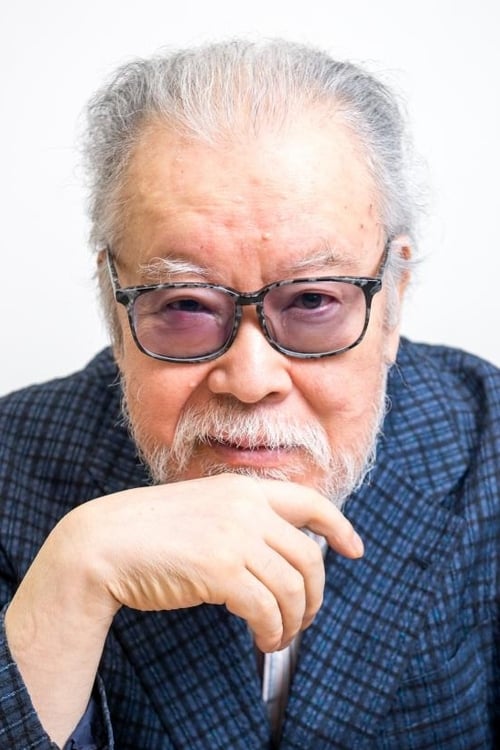
Satoshi Itomura is an assistant police investigator who belongs to the Metropolitan Police Department’s Scientific Investigation Team. Reenactments, fingerprint and voice data collections, profiling... His team collects scientific evidence and pieces together fragments of information in order to help build evidences. However, Itomura often does not care about the scientific approach and instead pays a great deal of attention to the things that the victims always carried with them or treasured. And he focuses on these things because they usually carry the victim’s dying wishes, understanding that last message not only helps solve the cases but also brings closure to the depressed family of victims.
A lawyer with a big personality works with an straightlaced recent law graduate on various law cases in Japan.
Dr. Shindo seems cold, but is a competent surgeon. He is also an ER doctor capable of accurate decisions and treatment, who always tries to see things from the patient’s side. Although once retired from his profession, he one day discovers someone in need of help, who he treats and rushes to the Kohoku Medical University Emergency Center. This incident encourages him to once again work as an ER doctor. Confrontation erupts between female doctor Tamaki, and Shindo, now a just-arrived ER doctor. While this human drama depicts the relationships among doctors and nurses, it appeals emotionally to viewers on the subject of life.
Dr. Atsuko Chiba is a research psychologist who uses a device called the DC Mini to enter her patients' dreams, wherein she adopts the alter-ego "Paprika". When the device is stolen, she must stop rogue elements from merging the dream and waking worlds.
Saka no Ue no Kumo is an NHK 21st Century special drama which was aired over three years starting from November 29, 2009. The series runs 13 episodes at 90 minutes each. The first series, with 5 episodes, was broadcast in 2009, while series two and three, each with 4 episodes, were broadcast in late 2010 and 2011. While most episodes were shot in Japan, one of the episodes in series two was shot in Latvia. The TV series is based on the novel Saka no ue no kumo by Ryōtarō Shiba and adopted by Hisashi Nozawa. The theme song of the drama series is titled "Stand Alone". It was composed by Joe Hisaishi, written by Kundo Koyama and performed by British soprano singer Sarah Brightman.
The Story is about three daughters of a "Hatamoto" during the end of the Edo period and the Meiji Restoration.
The 39th NHK Taiga Drama is Aoi Tokugawa Sandai. It is James Miki's dynamic and colorful tale of three generations of the Tokugawa dynasty--from its founder Ieyasu to Iemitsu, the third Shogun who solidified the Tokugawa power base.
The 37th NHK Taiga Drama is Tokugawa Yoshinobu. The series focuses on the life of Tokugawa Yoshinobu, the 15th and final ruler of the Tokugawa period. Born the seventh son of Lord Nariaki of Mito, Yoshinobu is named shogun when he is just 29 years old. With a wisdom and vision beyond his years, he tries to prolong the life of this 200-year-old dynasty which began with Ieyasu. However, he is unable to forestall the winds of revolution as clans in Choshu, Satsuma and Tosa, with the help of the Imperial Court, clamor for change.
On Christmas Eve, three homeless people living on the streets of Tokyo discover a newborn baby among the trash and set out to find its parents.
A mysterious international crime organization makes a demand of 900 million yen from the Japanese government for the release of hostages. The group then targets a victory parade of a world sports game to commit indiscriminate terror.
National Audit Bureau member Hajime Matsudaira (Shinichi Tsutsumi), Tadako Torii (Haruka Ayase) & Asahi Gainsbourg (Masaki Okada) travel from their homebase of Tokyo to the city of Osaka. Their mission is to discover any financial irregularities & to ensure the correct use of federal money in the Osaka city government. Their initial audits go smoothly, but things turn more interesting once they enter the Karahori shopping district - the area with a long history reaching back to the Meiji era.
The lakeside at Lake Yamanaka is covered with snow. In the vacation house in such a quiet area owned by the chairman of Watsuji Seiyaku, one of the leading pharmaceutical companies in Japan, the tragedy suddenly breaks out. ”I have killed my granduncle!!” says Mako, who is loved by everybody in the Watsuji family. She has stabbed her granduncle, Yohei, to death. Soon after the domestic homicide, the entire family joining together in an attempt to make it look like a crime committed by somebody outside the family, begins to engage in imitative deception...
Three men are possessed by the spirits of ancient samurai determined to build their master's castle, even if they must use cardboard.
Kohei Miyazaki (Naoto Takenaka), a former railroad worker, has become obsessed with locating the ancient country of Yamatai. His obsession sprouted from a day when he discovered ancient ceramics while repairing railroad tracks. Now completely blind, Kohei relies on his wife (Sayuri Yoshinaga) to guide him through the country and read the maps in their pursuit of Yamatai.
A diving club is in danger of going bankrupt. To save the diving club, a female coach returns from the U.S. to coach the club and promises that a diver from the club will make the Japanese Olympic team.
When photographer Ishida first sees Sada, the wife of a new acquaintance, his photo shoot with Sada turns quickly into a steamy affair of mind-blowing proportions
Takeshi Kitano plays a version of himself in which he's a struggling director cycling through a number of different genres in an effort to complete his latest project.
In 1943, as Japan's WWII effort falters, a vice-admiral proposes training squadrons of "volunteer" flyers to crash their armed planes into Allied warships. Yarn follows the lives of kamikaze pilots, as remembered by an aging Kyushu restaurateur who cherishes their memory. Honoring the dead and multiple military anthems may stir the soul of some Japanese, but elsewhere auds will make a one-way trip for exits. Battle scenes are well-executed and script delivers some memorable scenes, but overall competent helming and thesping are powerless over writer-cum-Tokyo governor Shintaro Ishiara's repetitive storytelling. A post-war postscript adds considerable length to an already over-extended narrative. Tech credits are good quality.
Kosuke is 31, and tired of his hometown where nothing happens. On a whim, he departs for New York with dreams of making it big. 6 months later, he straggles home... defeated, and saddled with debt. Awaiting him are his old friends, a caring sister, a disgruntled father ...and a bowl of noodles. Namely, "udon" noodles. The town is built around udon, sustained by udon, nationally famous for udon.
A car carrying a wealthy man and his second wife, Kumako (Yo Kimiko), falls into the sea, and only Kumako survives. At first, it is thought to be just an accident, but the absence of brake marks makes Kumako a strong suspect... Meanwhile, newspaper reporter Akitani Shigekazu (Sato Koichi) gets caught up in an unexpected situation after breaking the news about Toyosaki Katsuo (Emori Toru), a man who knows Kumako's past...
Yu Miri is a writer who's just become pregnant by her married lover. When she decides to keep the baby without his help, her ex-boyfriend Yutaka, decides to help raise him.
Jidai-geki period / folklore type stories that were comissioned by the Kumamoto prefacture of Kyushu island in 1996 and filmed over a period of three years. Kumamoto Monogatari is a 2002 omnibus which includes the three short films: Zuiketsu Genso: Tonkararin Yume Densetsu, Kikuchi-jo Monogatari: Sakimori-tachi no Uta, Onna Kunishuu Ikki.
A Japanese film that tells the tale of the birth of VHS. It follows Kagatani Shizuo, an electronics employee who rallies his coworkers to save their jobs by increasing sales. They do this by developing the VHS standard. They battle with Sony and their standard and ultimately prevail.
Hosted by veteran comedian Tamori, "Bizarre Tales 2002 Spring Special" presents five tales. 1. Mushi Game (Ignore the Game) - starring Uchiyama Rina 2. Okashina Machi (Funny Town) - starring Yanagiba Toshiro 3. Tokage no Shippo (Lizard's Tail) - starring Kashiwabara Takashi 4. Yogisha no Otoko (Man's Night Train) - starring Osugi Ren 5. Manhole - starring Kagawa Teruyuki
Produced for Fuji TV in 2000, the film reinterprets the story of a special samurai force - the Shinsengumi - at the end of the Edo period.
The psychiatric evaluation of a young actor arrested for a brutal double murder concludes he may be unfit for trial. Further investigation, however, reveals the crime was a well-planned statement against the section of Japan's criminal code granting diminished responsibility to the mentally impaired.
This home comedy tells the story of Kyoichiro and his teenage daughter Koume. One day, the two ride a train together after visiting Kyoichiro's mother-in-law. He sees it as a chance to get to know his daughter better, but he ends up getting more than that - by some mysterious force, both Kyoichiro and Koume end up with their mind in the other's body! Unfortunately, they have no choice but to swap lives, pretending to be each other at school and work.
NHK's 50th-anniversary memorial drama serial. This drama consisting of several short stories starring some of the well-known actors and actress of Japan today. A ball floats from the river's source to the sea, unlocking the portrayal of six love stories across the four seasons of the year.
A romance of a man who risked his life at sea on a Kitamae ship during the Edo period. Based on the famous book "Offshore of Rape Blossoms" by Ryotaro Shiba, the movie tells the story of Kahei Takadaya, a great merchant who lived a turbulent life and single-handedly conducted diplomacy with the great Russian power.
The series tells The story of the 1609 invasion of Ryûkyû by forces from the Japanese domain of Satsuma, an event which changed the course of Ryukyuan history dramatically.
This is the story about the a very powerful Lady Kasuga who established Ooku the inner palace.
" Kakushimetsuke Sanjou" (The Hidden Inspector Appears ) is a television period drama produced by Mainichi Broadcasting System and Mifune Productions . It aired on the TBS network every Saturday at 10 PM from April 3 to September 25, 1976. It consisted of 26 episodes.