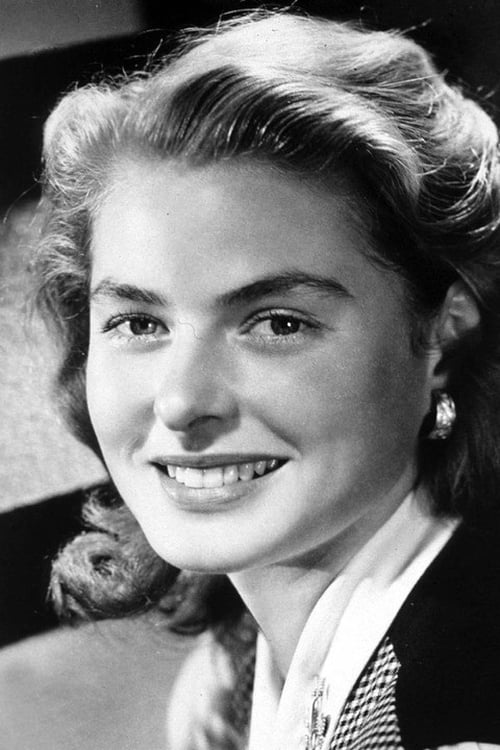
Known For
The Antoinette Perry Award for Excellence in Theatre, more commonly known as a Tony Award, recognizes achievement in live Broadway theatre. The awards are presented by the American Theatre Wing and The Broadway League at an annual ceremony in New York City. The awards are given for Broadway productions and performances, and an award is given for regional theatre.
Apostrophes was a live, weekly, literary, prime-time, talk show on French television created and hosted by Bernard Pivot. It ran for fifteen years (724 episodes) from January 10, 1975, to June 22, 1990, and was one of the most watched shows on French television (around 6 million regular viewers). It was broadcast on Friday nights on the channel France 2 (which was called "Antenne 2" from 1975 to 1992). The hourlong show was devoted to books, authors and literature. The format varied between one-on-one interviews with a single author and open discussions between four or five authors.
Marcello Mastroianni, Isabelle Adjani, Alain Delon, Martin Scorsese, Woody Allen... the biggest stars in cinema were welcomed by Christian Defaye on his show Spécial cinéma. Between intimate confessions from actors and immersion in the world of the greatest filmmakers, Christian Defaye took viewers on a journey into the fascinating world of cinema for nearly thirty years.
Omnibus was an arts-based BBC television documentary series, broadcast mainly on BBC1 in the United Kingdom. The programme was the successor to the long-running arts-based series 'Monitor'. It ran from 1967 until 2003, usually being transmitted on Sunday evenings. During its 35-year history, the programme won 12 Bafta awards. Among the series' best remembered documentaries are Cracked Actor, a profile of David Bowie, and Rene Magritte, a graduate film by David Wheatley, 'Madonna: Behind the American dream', a film produced by Nadia Hagger, and a profile of the British film director Ridley Scott. For a season in 1982, the series was in a magazine format presented by Barry Norman. The series was replaced by 'Imagine' hosted by Alan Yentob.
Intimate Portrait is a biographical television series on the Lifetime Television cable network focusing on different celebrities, which includes interviews with each subject. Among the people profiled were Grace Kelly, Natalie Wood, Carly Simon, Jackie Kennedy, Katharine Hepburn, Carol Burnett, Tanya Tucker, and Marla Maples.
The Bambi, often called the Bambi Award and stylised as BAMBI, is a German award presented annually by Hubert Burda Media to recognize excellence in international media and television to personalities in the media, arts, culture, sports, and other fields "with vision and creativity who affected and inspired the German public that year", both domestic and foreign. First held in 1948, it is the oldest media award in Germany. The trophy is named after Felix Salten's book Bambi, A Life in the Woods and its statuettes are in the shape of the novel's titular fawn character. They were originally made of porcelain until 1958, when the organizers switched to using gold, with the casting done by the art casting workshop of Ernst Strassacker in Süßen.
The BBC's flagship cinema review TV program featuring reviews of new releases, news items and interviews. The title of the program changes each year to incorporate the year of broadcast.
An annual American awards ceremony honoring cinematic achievements in the film industry. The various category winners are awarded a copy of a statuette, officially the Academy Award of Merit, that is better known by its nickname Oscar.
Photo Gallery


Movie Credits (117)
There are two Bergmans. One speaks English, the other Italian. They fall in love and set off impulsively to live together. But reality is far from easy. As the rift between their emotions deepens, what choice will they make? And what kind of ending awaits them?
The film focuses on the icon of Hollywood’s golden age, Humphrey Bogart, and is framed around his relationships with the five formidable women in his life – his mother and his four wives, including Lauren Bacall. Featuring unprecedented access to rare footage from the estate, and narrated exclusively in his own words, ‘Bogart: Life Comes in Flashes’ explores his journey to become the of star of timeless classics ‘Casablanca,’ ‘Maltese Falcon’’ and ‘The Big Sleep.’ Each relationship offers a deep and intimate understanding of a man for whom stardom was hard won and much deserved.
The story of how Norma Jeane Mortenson became Marilyn Monroe (1926-62), a lucid path of self-discovery, from anonymity to stardom: the painful birth of a myth.
A laid-back journey in search of one of the world’s most fascinating families, observed and examined from within its most intimate relationships, where the truth and depth of a memoir meet the ironic tone of an indie comedy.
The incredible story of the mythical Russian-American actor and filmmaker Yul Brynner (1920-85), the most exotic sex-symbol since Rudolph Valentino; the story of the atypical destiny of an international nomad: from the Parisian cabarets to the stages of Broadway and the Hollywood studios. The rise to fame of a multidisciplinary genius who became a king of the screen.
I have a lot of interest and respect for classic cinema. I tried to make a film with at least 20 portraits of classical actresses whose films I'm familiar with. Difficult choices from all over the world. They each have their own beauty.
Julie Andrews starred in Hollywood productions that have become iconic movies, winning an Oscar for her performance as Mary Poppins, a symbol of the magic of musicals from the 1960s. And yet, behind the squeaky-clean image hides a much more tortuous career, with its moments of glory and tough times, all of which explain the longevity of a story that is still being written.
For the first time one of Hollywood's greatest stars tells his own story, in his own words. From a childhood of poverty to global fame, Cary Grant, the ultimate self-made star, explores his own screen image and what it took to create it.
Armed with a limitless Rolodex and a Benedict Canyon enclave with its own disco, Allan Carr threw the Hollywood parties that defined the 1970s. A producer, manager, and marketing genius, Carr built his bombastic reputation amid a series of successes including the mega-hit musical film "Grease," until it all came crashing down after he produced the 1989 Academy Awards, a notorious debacle.
Film journalist and critic Rüdiger Suchsland examines German cinema from 1933, when the Nazis came into power, until 1945, when the Third Reich collapsed. (A sequel to From Caligari to Hitler, 2015.)
A journey in the company of Bernadette Lafont, French Cinema’s most atypical actress. Tracing her career from pin-up girl, to New Wave model of sexual freedom, to drug-dealing granny in the film Paulette, by way of La Fiancée du Pirate and Les Stances à Sophie, this film pays tribute to her extraordinary life and artistic odyssey. Her grand-daughters, Anna, Juliette and Solène, revisit the dreams of Bernadette, in the family home in the Cevennes region where they, like her, grew up. Her close friends, Bulle Ogier and Jean-Pierre Kalfon, reminisce on their artistic and human complicity. Throughout the film, Bernadette Lafont in person, with her inimitable character actress voice, re-evokes a life in cinema marked with insolence, courage and freedom.
Original newsreels, clips from Roberto Rossellini films starring the actress, and above all, astonishing home movies made largely by Ingrid Bergman herself: they all go into this story of the great Hollywood star's Italian years, from 1948 to 1956. Eight years that cover her memorable love affair with Roberto Rossellini, their three children and five unforgettable films. It's an Italian journey through Ingrid's eyes, here in an unusual role as "director", and an emotional and at times exotic look at the country, part family life, part Dolce Vita. The narrator for the occasion is the actress herself, in interviews and other stock footage, with the exception of a letter to Roberto Rossellini which is the stuff of legend, read by their daughter Isabella.
A personal and captivating account of the extraordinary life and work of Ingrid Bergman (1915-82), a young Swedish woman who became one of the most celebrated actresses in world cinema.
In 1948, a fan letter arrived for director Roberto Rossellini from Ingrid Bergman, one of Hollywood’s biggest stars; after a meeting in New York, Rossellini invited Bergman to Italy to work on a project. Meanwhile, Anna Magnani, one of Italy’s biggest stars and Rossellini’s longtime lover, was furious. When the Rossellini/Bergman project was announced as a tale set on Stromboli, one of the volcanic Aeolian Islands, Magnani quickly set up her own Aeolian project, financed by Hollywood, to be called Volcano. Italy’s tabloids simply went wild: the prospect of these two great divas battling it out with rival productions was breathlessly followed, especially as it became clear that the Rossellini/Bergman relationship was more than professional. Francesco Patierno has created an engrossing, revealing and highly entertaining chronicle of this cinematic battle royal.
Biggest Hollywood stars in Italy from 1950 to 1970 through Cinecittà Luce's archives.
Documentary about the making of Alfred Hitchcock's 1946 film "Notorious."
Warner Bros. uses the movies to prepare the US for war and keep up morale on the home front during World War II.
A documentary analyzing the surrealist elements of the film Spellbound, and the work made by Salvador Dalí in that film.
Television documentary about the making of Roberto Rossellini's 1945 film "Rome, Open City".
1955 - the year when The rip hunter is buried in snow for eight days before his ski pole with a movie ticket is discovered. Ingrid Bergman gets bad reviews as Joan of Arc, and James Dean dies in a 185 km/h car crash. The knappupgänget, with Povel Ramel and Gunwer Bergkvist, go to Nairobi to shoot a film that will never be finished. Sweden votes no to right-hand traffic and the "Motbok" disappears in October. Charlie Norman writes film music and gets a job in the US, while Sigge Eriksson becomes a world figure skating champion in Moscow. Anita Ekberg visits after years in Hollywood and Louis Armstrong gives concerts in Stockholm. Luleå is building the world's first indoor shopping center, and Viggen Viggo is visible on the TV screen.
TV Credits (20)
In 2025 it will be 80 years since the end of World War II. What was it like to live in Sweden during the war? How were people affected by everything that happened so close to home? SVT has asked the Swedish people to send in their memories: letters, films, photographs and diaries and several thousand responses were received from all over the country.
A look back at television appearances by legends of the silver screen, using archive footage to tell the story of their lives and careers.
Intimate Portrait is a biographical television series on the Lifetime Television cable network focusing on different celebrities, which includes interviews with each subject. Among the people profiled were Grace Kelly, Natalie Wood, Carly Simon, Jackie Kennedy, Katharine Hepburn, Carol Burnett, Tanya Tucker, and Marla Maples.
Apostrophes was a live, weekly, literary, prime-time, talk show on French television created and hosted by Bernard Pivot. It ran for fifteen years (724 episodes) from January 10, 1975, to June 22, 1990, and was one of the most watched shows on French television (around 6 million regular viewers). It was broadcast on Friday nights on the channel France 2 (which was called "Antenne 2" from 1975 to 1992). The hourlong show was devoted to books, authors and literature. The format varied between one-on-one interviews with a single author and open discussions between four or five authors.
Marcello Mastroianni, Isabelle Adjani, Alain Delon, Martin Scorsese, Woody Allen... the biggest stars in cinema were welcomed by Christian Defaye on his show Spécial cinéma. Between intimate confessions from actors and immersion in the world of the greatest filmmakers, Christian Defaye took viewers on a journey into the fascinating world of cinema for nearly thirty years.
In 1973 the American Film Institute initiated its Life Achievement Award, to be presented to a yearly recipient whose talent has fundamentally advanced the film art; whose accomplishments have been acknowledged by scholars, critics, professional peers and the general public; and whose work has stood the test of time.
The BBC's flagship cinema review TV program featuring reviews of new releases, news items and interviews. The title of the program changes each year to incorporate the year of broadcast.
Omnibus was an arts-based BBC television documentary series, broadcast mainly on BBC1 in the United Kingdom. The programme was the successor to the long-running arts-based series 'Monitor'. It ran from 1967 until 2003, usually being transmitted on Sunday evenings. During its 35-year history, the programme won 12 Bafta awards. Among the series' best remembered documentaries are Cracked Actor, a profile of David Bowie, and Rene Magritte, a graduate film by David Wheatley, 'Madonna: Behind the American dream', a film produced by Nadia Hagger, and a profile of the British film director Ridley Scott. For a season in 1982, the series was in a magazine format presented by Barry Norman. The series was replaced by 'Imagine' hosted by Alan Yentob.
ABC Stage 67 is the umbrella title for a series of 26 weekly shows that included dramas, variety shows, documentaries, and original musicals. It premiered on American Broadcasting Company on September 14, 1966 with Murray Schisgal's The Love Song of Barney Kempinksi, directed by Stanley Prager and starring Alan Arkin as a man enjoying the sights and sounds of New York City in his last remaining hours of bachelorhood. Arkin was nominated for an Emmy Award for Outstanding Single Performance By An Actor in a Leading Role in a Drama and the program was nominated as Outstanding Dramatic Program. Future programs included appearances by Petula Clark, Bobby Darin, Sir Laurence Olivier, Albert Finney, Peter Sellers, David Frost, and Jack Paar. ABC's effort to bring culture to the masses was a noble but unsuccessful experiment. Scheduled first against I Spy on Wednesdays and then The Dean Martin Show on Thursdays, the show consistently received low ratings. Its last production, an adaptation of Jean Cocteau's one-woman play The Human Voice starring Ingrid Bergman, aired on May 4, 1967. "Stage 67" was not actually a part of the primary ABC facilities in Los Angeles. It was produced at the old Monogram Studios backlot that was later sold to KCET.
Startime, an anthology of drama, comedy and variety, was one of the first American television shows broadcast in color.
Presents a filmed, intercontinental conversation that links moderator Edward R. Murrow in New York with three internationally known figures located in different parts of the world. What set this apart from other televised interview/discussion programs was the fact that its participants could not see each other but could hear one another via telephone lines and radio.
The Antoinette Perry Award for Excellence in Theatre, more commonly known as a Tony Award, recognizes achievement in live Broadway theatre. The awards are presented by the American Theatre Wing and The Broadway League at an annual ceremony in New York City. The awards are given for Broadway productions and performances, and an award is given for regional theatre.
An annual American awards ceremony honoring cinematic achievements in the film industry. The various category winners are awarded a copy of a statuette, officially the Academy Award of Merit, that is better known by its nickname Oscar.
The Bambi, often called the Bambi Award and stylised as BAMBI, is a German award presented annually by Hubert Burda Media to recognize excellence in international media and television to personalities in the media, arts, culture, sports, and other fields "with vision and creativity who affected and inspired the German public that year", both domestic and foreign. First held in 1948, it is the oldest media award in Germany. The trophy is named after Felix Salten's book Bambi, A Life in the Woods and its statuettes are in the shape of the novel's titular fawn character. They were originally made of porcelain until 1958, when the organizers switched to using gold, with the casting done by the art casting workshop of Ernst Strassacker in Süßen.
