Known For
The Tonight Show Starring Johnny Carson is a talk show hosted by Johnny Carson under The Tonight Show franchise from 1962 to 1992. It originally aired during late-night. For its first ten years, Carson's Tonight Show was based in New York City with occasional trips to Burbank, California; in May 1972, the show moved permanently to Burbank, California. In 2002, The Tonight Show Starring Johnny Carson was ranked #12 on TV Guide's 50 Greatest TV Shows of All Time.
The Mike Douglas Show is an American daytime television talk show hosted by Mike Douglas that originally aired only in the Cleveland area during much of its first two years on the air. It then went into syndication in 1963 and remained on television until 1982. It was distributed by Westinghouse Broadcasting and for much of its run, originated from studios of two of the company's TV stations in Cleveland and Philadelphia.
The Antoinette Perry Award for Excellence in Theatre, more commonly known as a Tony Award, recognizes achievement in live Broadway theatre. The awards are presented by the American Theatre Wing and The Broadway League at an annual ceremony in New York City. The awards are given for Broadway productions and performances, and an award is given for regional theatre.
Marcello Mastroianni, Isabelle Adjani, Alain Delon, Martin Scorsese, Woody Allen... the biggest stars in cinema were welcomed by Christian Defaye on his show Spécial cinéma. Between intimate confessions from actors and immersion in the world of the greatest filmmakers, Christian Defaye took viewers on a journey into the fascinating world of cinema for nearly thirty years.
The Ed Sullivan Show is an American TV variety show that originally ran on CBS from Sunday June 20, 1948 to Sunday June 6, 1971, and was hosted by New York entertainment columnist Ed Sullivan. It was replaced in September 1971 by the CBS Sunday Night Movie, which ran only one season and was eventually replaced by other shows. In 2002, The Ed Sullivan Show was ranked #15 on TV Guide's 50 Greatest TV Shows of All Time.
The original concept of the show was to allow the viewer to see the inner workings of a movie studio and featured interviews with MGM stars and explanations of how movies were made. Later, the format changed to show edited versions of MGM films.
The Bambi, often called the Bambi Award and stylised as BAMBI, is a German award presented annually by Hubert Burda Media to recognize excellence in international media and television to personalities in the media, arts, culture, sports, and other fields "with vision and creativity who affected and inspired the German public that year", both domestic and foreign. First held in 1948, it is the oldest media award in Germany. The trophy is named after Felix Salten's book Bambi, A Life in the Woods and its statuettes are in the shape of the novel's titular fawn character. They were originally made of porcelain until 1958, when the organizers switched to using gold, with the casting done by the art casting workshop of Ernst Strassacker in Süßen.
The BBC's flagship cinema review TV program featuring reviews of new releases, news items and interviews. The title of the program changes each year to incorporate the year of broadcast.
Photo Gallery


Movie Credits (120)
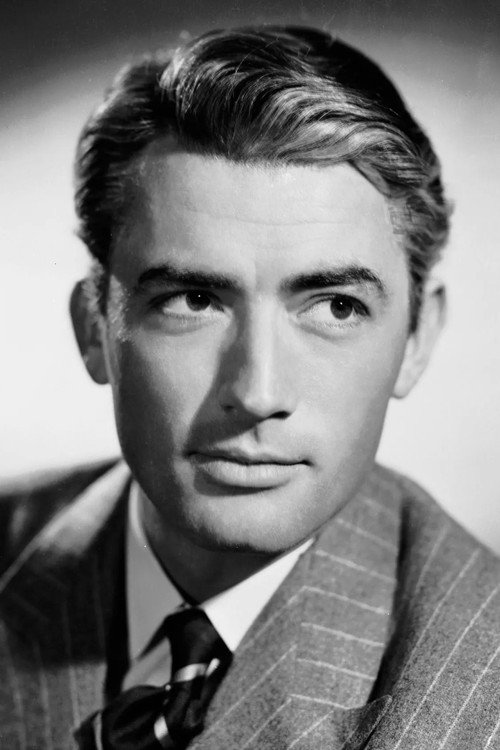
A legend of the Hollywood Golden Age, Gregory Peck (1916-2003) had an exemplary career, working under some of the greatest directors: Alfred Hitchcock, Elia Kazan, Raoul Walsh, Vincente Minnelli... Portrait of an actor with irresistible charm and strong political commitments.
A 60th anniversary retrospective documentary on the influence and context of the 1962 film, To Kill a Mockingbird.
Armed with a limitless Rolodex and a Benedict Canyon enclave with its own disco, Allan Carr threw the Hollywood parties that defined the 1970s. A producer, manager, and marketing genius, Carr built his bombastic reputation amid a series of successes including the mega-hit musical film "Grease," until it all came crashing down after he produced the 1989 Academy Awards, a notorious debacle.
Always the epitome of style, Audrey Hepburn fittingly started out as a model before being spotted by a movie producer. Her first major film, Roman Holiday, won her an Academy Award for Best Actress and catapulted her to stardom. Further performances in Funny Face and Sabrina Fair confirmed her status as one of the most adored actresses around. But it was when she donned a Givenchy dress in Breakfast at Tiffany's that Audrey Hepburn became an enduring style icon, her name synonymous with playful decadence and grace.
During the 1940s, Nevil Shute had a steady job as an engineer in the British military but in his spare time, he wrote novels that were being well-received. Once the war was over, Shute choose to move to Australia and focus on writing, soon becoming an internationally acclaimed novelist. His novel On The Beach, particularly hit a chord with the international community, depicting the impact of global nuclear destruction. This documentary studies Shute's career and the adaptation of his most famous novel into a feature film in Melbourne, as his predictions of a post-Hiroshima world seem to be foreboding in their accuracy.
More than 150 silent short films about singers, actors and directors captured during Press Conferences in Cannes, Venice and Berlin, between 1993 and 2002. Presented the first time in 2012 (ten years after the last shooting) in Napoli Film Festival and in 2013 at the Art Institute of California in Santa Ana. An anthropological experiment on the facial expressions of famous people showing the human being aspect. All original footage from Mel Gibson to Peter Jackson, from George Lucas to Catherine Deneuve, from Michael Douglas to Giancarlo Giannini and many others.
The filming of "The Omen" (1976) was plagued by tragedy and bizarre incidents. "The devil was at work and he didn't want that film made" - Producer Harvey Bernhard.
A German documentary about the life of Hollywood icon Audrey Hepburn.
Barbra Streisand returned to regular concert performances with this lavish production at the MGM Grand Hotel in Las Vegas. Performing on New Years Eve 1993 and January 1, 1994 Streisand was a smash hit and a U.S concert toured followed through the first half of 1994. The tour concluded in July in Anaheim, California and the final performance was filmed for a HBO special and won Barbra two Emmys the following year. However THIS performance is the MGM Grand concert which was filmed but not released in any format until 2004.
A tribute to the legendary costume designer Edith Head during her years providing costumes for the films of Paramount studio which includes Sunset Boulevard, Roman Holiday and many others during her distinguished career that lasted more than six decades and earned her eight Academy Awards wins in between more than 30 nominations.
Brief documentary on the painstaking process to restore Roman Holiday (1953) for DVD release.
From Czarist Russia's Moscow Art Theatre to Hollywood's biggest film, narrator Gregory Peck joins an A-list of Hollywood stars to take us through the odyssey of two Russian born Hollywood legends: The great acting teacher Michael Chekhov and the amazing director George Shdanoff.
Darryl F. Zanuck ignores the protests of his peers and makes a movie about antisemitism called "Gentleman's Agreement" (1947).
A retrospective documentary on the making of Cape Fear (1991) and Cape Fear (1962).
A short documentary with interviews explaining how the classic film "Cape Fear" was filmed.
Millions of people around the world know of him. Yet this frontier prophet of the early 1800's found little honor and eventual martyrdom at the hands of an angry mob in his own country. Who was this Joseph Smith and what was it about his remarkable life story, which inspired such impassioned rancor or unflinching reverence? Please join Academy Award winner Gregory Peck for a fascinating look at this oft-misunderstood American legend.
Not your usual film biography, A Conversation With Gregory Peck (2000) goes on-the-road and behind-the-scenes with Gregory Peck and his one man show. The actor's traveling program features question and answer sessions with the American icon and allows the actor to reminisce about his career.
Paying homage to two of Hollywood's central icons, the film creates an unparalleled portrait of two very different personalities amidst the demise of the studio system.
Documentary on the career of Lauren Bacall.
A documentary about the making of "To Kill a Mockingbird."
TV Credits (23)
A look back at television appearances by legends of the silver screen, using archive footage to tell the story of their lives and careers.
The sole survivor of a lost whaling ship relates the tale of his captain's self-destructive obsession to hunt the white whale, Moby Dick.
The history of the sport of baseball in America, told through archival photos, film footage, and the words of those who contributed to the game in each era. Writers, historians, players, baseball personnel, and fans review key events and the significance of the game in America's history.
The Blue and the Gray is a television miniseries that first aired on CBS in three installments on November 14, November 16, and November 17, 1982. Set during the American Civil War, the series starred John Hammond, Stacy Keach, Lloyd Bridges, and Gregory Peck as President Abraham Lincoln. It was executive produced by Larry White and Lou Reda, in association with Columbia Pictures Television, then owned by The Coca-Cola Company.
The Kennedy Center Honors is an annual honor given to those in the performing arts for their lifetime of contributions to American culture.
A talk show presented by Michel Drucker
Dinah's show premiered 9 September 1974 and continued through to 4 September 1981. She started out the 70's with Dinah's Place which usually featured one guest and was more of a home oriented show about cooking, crafts and occasionally music. This format lasted until May of 1974. When the show came back in October of 1974 the format had changed drastically to a variety talk show which was called Dinah. and went on until 1981. This show was also known as "Dinah and Friends" during the summer of 1976.
Marcello Mastroianni, Isabelle Adjani, Alain Delon, Martin Scorsese, Woody Allen... the biggest stars in cinema were welcomed by Christian Defaye on his show Spécial cinéma. Between intimate confessions from actors and immersion in the world of the greatest filmmakers, Christian Defaye took viewers on a journey into the fascinating world of cinema for nearly thirty years.
In 1973 the American Film Institute initiated its Life Achievement Award, to be presented to a yearly recipient whose talent has fundamentally advanced the film art; whose accomplishments have been acknowledged by scholars, critics, professional peers and the general public; and whose work has stood the test of time.
The BBC's flagship cinema review TV program featuring reviews of new releases, news items and interviews. The title of the program changes each year to incorporate the year of broadcast.
V.I.P.-Schaukel is a 45 minute documentary-family-news-talk show starring Margret Dünser as Host. The series premiered on Sun May 09, 1971 on ZDF and Folge 37 - Final Show last aired on Fri May 09, 1980.
The Tonight Show Starring Johnny Carson is a talk show hosted by Johnny Carson under The Tonight Show franchise from 1962 to 1992. It originally aired during late-night. For its first ten years, Carson's Tonight Show was based in New York City with occasional trips to Burbank, California; in May 1972, the show moved permanently to Burbank, California. In 2002, The Tonight Show Starring Johnny Carson was ranked #12 on TV Guide's 50 Greatest TV Shows of All Time.
The Mike Douglas Show is an American daytime television talk show hosted by Mike Douglas that originally aired only in the Cleveland area during much of its first two years on the air. It then went into syndication in 1963 and remained on television until 1982. It was distributed by Westinghouse Broadcasting and for much of its run, originated from studios of two of the company's TV stations in Cleveland and Philadelphia.
The Dick Powell Show is an American anthology series that ran on NBC from 1961- 1963, primarily sponsored by the Reynolds Metals Company. It was hosted by longtime film star Dick Powell until his death from lymphatic cancer on January 2, 1963, then by a series of guest hosts until the series ended. The first of these was Gregory Peck, who began the January 8 program with a tribute to Powell, recognizing him as "a great and good friend to our industry." Peck was followed by fellow actors such as Robert Mitchum, Frank Sinatra, Glenn Ford, Charles Boyer, Jackie Cooper, Rock Hudson, Milton Berle, Jack Lemmon, Dean Martin, Robert Taylor, Steve McQueen, David Niven, Danny Thomas, Robert Wagner and John Wayne.
The Antoinette Perry Award for Excellence in Theatre, more commonly known as a Tony Award, recognizes achievement in live Broadway theatre. The awards are presented by the American Theatre Wing and The Broadway League at an annual ceremony in New York City. The awards are given for Broadway productions and performances, and an award is given for regional theatre.
The original concept of the show was to allow the viewer to see the inner workings of a movie studio and featured interviews with MGM stars and explanations of how movies were made. Later, the format changed to show edited versions of MGM films.
